
Best Medicine for Severe Cough
Types, Causes, and When to See a Doctor?
A comprehensive medical guide explaining dry cough causes, treatments, and ways to soothe coughing
Overview
Cough (tussis) treatment starts with understanding that it's a natural defensive reflex helping the body clear the airway of phlegm and irritants. Based on duration: Acute cough (less than 3 weeks) is often caused by colds, and chronic cough (more than 8 weeks) requires medical evaluation. SAVICUM Syrup is a formula combining herbal extracts (Ivy / Thyme / Licorice) with N-Acetylcysteine (NAC) as an effective option among the best medicines for a severe cough.
What is a cough? And why does it happen?
What is the best medicine for a severe cough?
Choosing the best medicine for a severe cough depends on knowing its type. If the cough is accompanied by phlegm, medicines containing mucolytics like (NAC) combined with natural extracts like ivy and thyme (such as Savicum syrup) are an excellent choice for loosening mucus and soothing the respiratory system. As for understanding dry cough causes and treatment, a doctor should be consulted to determine the root cause, such as allergies or acid reflux, before using any cough medication.
A cough is a natural defensive reflex through which the airways expel mucus, foreign bodies, or external irritants. Its occasional presence is normal and beneficial — it is a protective mechanism, not a disease in itself. However, if it lasts for more than 3 weeks or is accompanied by specific symptoms, a medical evaluation is required to determine the best medicine for severe cough and treat it.
NHS – Cough: causes and treatmentCough Duration: When is it considered "chronic"?
Doctors classify a cough based on its duration into three stages, each with a different diagnostic implication:
| Cough Type | Duration | Most Common Causes | Recommendation |
|---|---|---|---|
| Acute | Less than 3 weeks | Colds, flu | Self-care + consultation if needed |
| Subacute | 3 – 8 weeks | Post-infection, sinusitis | Monitoring + medical evaluation if worsening |
| Chronic | More than 8 weeks | Asthma, GERD, smoking | Medical evaluation is necessary |
Note for Children: In children, a cough lasting more than 4 weeks often requires a medical review to rule out asthma or persistent bronchitis.
Dry Cough Causes and Treatment
If you are wondering about dry cough causes and treatment, they range from simple reasons to those requiring medical attention. The most common causes are:
- Colds and viral respiratory infections — The most common cause of acute cough
- Allergies and sinusitis with postnasal drip — Mucus dripping down the throat causing irritation
- Asthma — Especially a nighttime cough, or during exercise or exposure to cold
- Gastroesophageal Reflux Disease (GERD) — Stomach acid irritating the throat and airways
- Smoking — A major cause of chronic productive morning cough
- Certain medications — Especially ACE inhibitors used for blood pressure
Types of Cough: Dry or with Phlegm? — And why does the difference matter?
Wet / Productive Cough
It sounds "wet" because there is mucus moving in the airways. It benefits most from mucolytics like NAC and expectorants that facilitate its expulsion.
Dry / Non-productive Cough
Often due to irritation or inflammation of the airway without clear phlegm. It requires soothers and demulcents for the mucous membrane more than expectorants.
Why is the distinction important before choosing a syrup? Mucolytics and expectorants are most useful for a cough accompanied by sticky phlegm — using them for a dry cough may not yield the expected results.
When to See a Doctor Immediately? (Red Flags)
Seek an urgent medical evaluation if the cough is accompanied by any of the following:
- Severe shortness of breath or loud wheezing
- Severe chest pain or chest pressure
- Coughing up blood (even a small amount)
- Persistent high fever or rapid deterioration
- Unexplained weight loss or night sweats
- Chronic cough lasting over 8 weeks
- Infant or young child with feeding or breathing difficulties
- Persistent hoarse voice or difficulty swallowing
What is SAVICUM Syrup?
SAVICUM Syrup is considered the best medicine for a severe cough, designed to support the respiratory system and relieve symptoms of a cough accompanied by phlegm, combining traditional herbal extracts and a scientifically studied mucolytic (NAC).
Savicum Ingredients and How Each Works in Cough Treatment
Ivy Leaf (Hedera helix)
Approved by the European Medicines Agency (EMA) for traditional use in a cough with phlegm. It contains saponins that bind to beta receptors in the lung, helping to loosen phlegm, improve its expulsion, and soothe airway irritation.
EMA – Ivy Leaf (HMPC)Thyme (Thymus vulgaris)
Approved by EMA for cold symptoms and cough. It contains thymol and carvacrol, which contribute to soothing throat irritation, stimulating cilia movement to push mucus upward, and supporting the expulsion of secretions.
EMA – Thyme (HMPC)Licorice (Glycyrrhiza glabra)
Traditionally used as a demulcent to soothe the mucous membrane in the throat. Important note: It may affect blood pressure and potassium levels with prolonged use or in high doses.
NCCIH – Licorice RootN-Acetylcysteine (NAC)
A studied pharmacological mucolytic. It breaks the disulfide bonds in mucus proteins, directly reducing its viscosity and making the phlegm easier to expel when coughing. Medically approved as a mucolytic for productive cough conditions.
MedlinePlus – AcetylcysteineWho Might Savicum Be Suitable For?
It may be suitable as symptom support in the following cases — bearing in mind the warnings below:
Cold Cough with Phlegm
The combination of NAC and herbal ingredients may help loosen sticky phlegm and facilitate its expulsion during a cold.
Throat and Airway Irritation
Licorice and thyme act as soothers that may relieve throat burn and irritation associated with a cold.
After Recovery from Infection
To help expel residual phlegm during the convalescence phase (subacute cough).
Not for Undiagnosed Chronic Cough
If the cough persists for more than 3 weeks, the cause must be diagnosed first before treating the cough with any syrup.
Important Note: Savicum is not a substitute for medical evaluation if the cough is severe, chronic, or accompanied by red flags. The syrup provides symptom support and is not a cure for the root cause.
Important Medical Warnings and Precautions
Pregnancy and Breastfeeding:
Use only after consulting a doctor due to the presence of licorice, which is recommended to be avoided during pregnancy, and other herbal components that haven't been sufficiently studied in pregnant women.
Licorice — Not suitable for those with:
- High blood pressure
- Low blood potassium levels
- Heart, kidney, or liver diseases
- Those taking diuretics, cortisone, or anticoagulants
NAC — Potential Drug Interactions:
It may interact with certain medications like specific antibiotics and anticoagulants. Consult a pharmacist or doctor if you are taking chronic medications before using it.
Dry Cough Medicines for Children and Adults: What's the Difference?
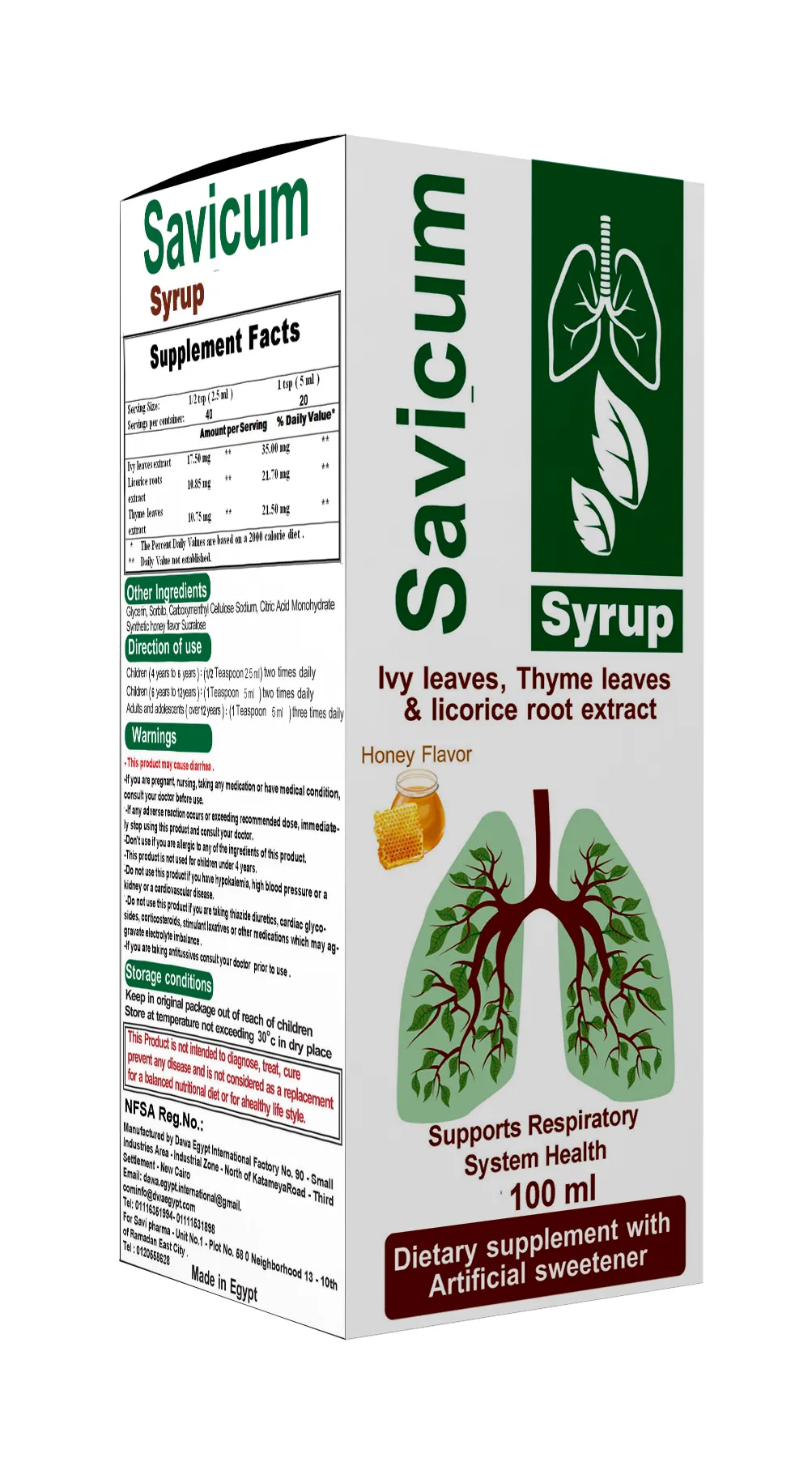
Dry cough medicines for children and adults differ fundamentally in concentration and active ingredients. While adults often rely on central cough suppressants to soothe a dry cough at night, it is always advised to stay away from these strong chemicals for children under 6 years to avoid neurological side effects.
Instead, turning to safe natural extracts like ivy leaf and thyme is considered the best and safest option for both children and adults alike. These ingredients work to moisturize the respiratory passages and soothe the spasms causing the cough. This is where Savicum Syrup stands out as the best medicine for severe dry cough thanks to its effective herbal formula.
Best Treatment for Cough and Phlegm
The best treatment for cough and phlegm is one that combines two properties: dissolving sticky mucus (Mucolytic) and expelling phlegm (Expectorant). It is not enough to just expel phlegm if it is highly viscous and adhered to the airways. Therefore, formulas containing the active (NAC) ingredient, which breaks phlegm bonds, alongside ivy extract, are considered a comprehensive treatment to get rid of chest congestion completely.
Drinks to Treat a Cough: Complementary Home Remedies
Warm drinks to treat a cough act as an instant soother for throat irritation and reduce phlegm viscosity. Among the best medically recommended drinks are:
- Boiled Wild Thyme: A natural bronchodilator (and a key ingredient in Savicum syrup).
- Warm Water with Honey and Lemon: Considered the best home remedy for a severe dry cough, as honey coats the throat and relieves congestion.
- Licorice Drink: A strong anti-inflammatory that helps treat annoying coughs.
*Tip from Savi Pharma doctors: These drinks are excellent as supportive therapy, but for a persistent cough, you must rely on a comprehensive medical syrup to ensure a swift recovery.*
Breathe Easy with Savicum
A formula combining Ivy, Thyme, and Licorice with NAC to relieve cough symptoms and facilitate phlegm expulsion
Learn about Savicum's natural formulaFrequently Asked Questions About Coughing and Savicum Syrup
Choosing the best medicine for a severe cough depends on its type. If it is accompanied by phlegm, medicines combining mucolytics like (NAC) and herbal extracts like ivy and thyme (such as Savicum syrup) are among the best options to soothe the cough and expel mucus.
The main causes of a dry cough include allergies, asthma, and gastroesophageal reflux disease (GERD). Treatment here relies on addressing the root cause and using throat lozenges or syrups containing licorice or thyme to soothe irritation.
An acute cough lasts less than 3 weeks and is often caused by a cold or flu, improving with self-care. A chronic cough lasts more than 8 weeks and may indicate asthma, GERD, smoking, or other conditions, requiring a thorough medical evaluation to determine the cause.
It may help soothe irritation thanks to its soothing ingredients like licorice and thyme, but its clearest benefit is for a cough with sticky phlegm due to the presence of NAC as a mucolytic. For a persistent, severe dry cough, a doctor's consultation is recommended.
See a doctor immediately if the cough is accompanied by: shortness of breath, chest pain, coughing up blood, or a persistent fever. Also, consult a doctor if the cough lasts more than 3 weeks even without severe symptoms, as a prolonged cough might indicate a cause requiring different treatment.
It is not recommended for use during pregnancy or breastfeeding unless prescribed by a doctor. Licorice, in particular, should be avoided in pregnancy due to its potential effects on blood pressure and hormones, along with other herbal components that require individual medical assessment.
NAC (N-Acetylcysteine) breaks the disulfide bonds in mucus proteins, directly reducing its viscosity and making it easier to expel when coughing. It is one of the most scientifically studied mucolytics and has been medically approved for this purpose for decades.
While chemical medicines like Dextromethorphan solely suppress the cough and may cause drowsiness, Savicum works with a dual mechanism: Ivy leaves expel phlegm, and thyme soothes a dry throat, making it a comprehensive treatment for both dry and productive coughs without causing lethargy.
Scientific References
- NHS – Cough: causes and treatment nhs.uk/conditions/cough/
- Mayo Clinic – Chronic Cough: definition and causes mayoclinic.org/symptoms/chronic-cough/
- EMA – Ivy Leaf / Hedera helix (HMPC Assessment) ema.europa.eu – hederae-helicis-folium
- EMA – Thyme / Thymus vulgaris (HMPC Assessment) ema.europa.eu – thymi-herba
- NCCIH – Licorice Root: uses and safety nccih.nih.gov/health/licorice-root
- MedlinePlus – Acetylcysteine (NAC): drug information medlineplus.gov – acetylcysteine