Medically Reviewed Article

Collagen and Bone Density After Menopause: What Does the Science Say?

A look at a randomized controlled study published in the journal Nutrients on collagen's role in supporting bone density, and how it fits within the broader picture of bone health after 40.

Dr. Mohamed Fathy Darwish
Medically reviewed by: Dr. Mohamed Fathy Darwish Consultant Orthopaedic Surgery & Sports Medicine

Bone Loss After Menopause: More Common Than You Might Think

Menopause affects far more than the menstrual cycle and well-known symptoms like hot flashes — it also has a direct impact on bone health. Estimates suggest that roughly one in three women over the age of 50 will experience osteoporosis, a figure that makes bone care after menopause a genuine health priority rather than just general advice.

The main driver behind this is the sharp drop in estrogen, a hormone that plays an important role in slowing down bone breakdown. Once its levels fall after menopause, bone density loss accelerates, particularly in the lumbar spine and femoral neck — the two areas most vulnerable to fractures.

Collagen Isn't Just for Skin and Joints

When people hear "collagen," they usually think of skin or joint health. But around 90% of bone's organic matrix is actually type I collagen, forming the flexible scaffold onto which calcium and other minerals are deposited to build solid bone tissue. In other words, even with adequate calcium intake, a weakened collagen scaffold can still affect bone strength and flexibility.

This biological role is exactly what led researchers at the University of Freiburg, Germany, to investigate collagen's effect on bone density in postmenopausal women, in a controlled clinical study published in 2018.

What Did the Study Find?

Researchers followed 131 postmenopausal women with reduced bone mineral density in a randomized, double-blind, placebo-controlled study lasting 12 consecutive months. One group took 5 grams of specific collagen peptides daily, while the other received a placebo with no active ingredient.

Notable increase in bone density at the lumbar spine
Increase in bone density at the femoral neck
Improvement in the bone formation marker (P1NP)
Decrease in bone breakdown markers compared to the control group

The researchers concluded that specific collagen peptides may play an important role as an adjunct therapy in improving bone density and reducing its loss in postmenopausal women.

An Important Scientific Note

It's worth clarifying that the collagen used in this study is a "Specific Collagen Peptide" (SCP), manufactured and tested specifically for this research purpose. It may differ in composition and effectiveness from other commercially available collagen types, such as the marine collagen typically used in joint and cartilage support products.

This doesn't diminish the nutritional value of collagen in general, but it does mean that the results of a study examining one specific type of collagen don't automatically apply to every collagen product on the market. It's always best to consult your doctor to find the option that's right for you.

Collagen Isn't a Substitute for Core Osteoporosis Treatment

The researchers themselves stressed that collagen may only be useful as an adjunct treatment, and doesn't replace the established core treatments for osteoporosis: regular physical activity, adequate vitamin D and calcium intake, and doctor-prescribed medication when needed. This is precisely where comprehensive nutritional formulas designed to support these essential elements together become important.

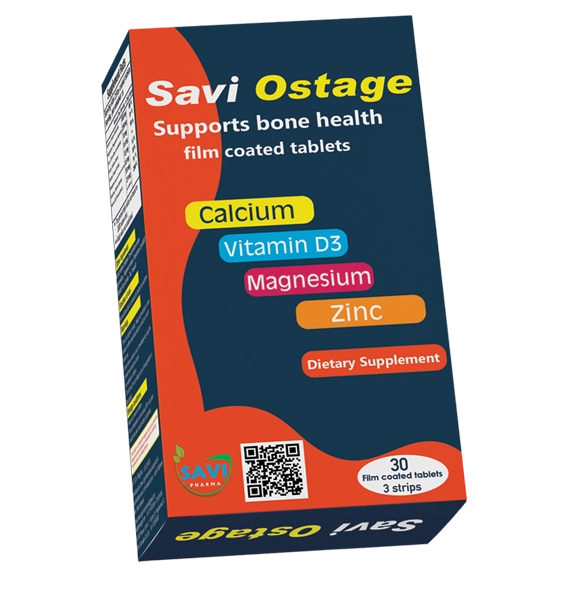
Savi Ostage tablets for bone health support

Savi Ostage: A Complete Formula for Bone Support

Savi Ostage combines calcium, vitamin D3, magnesium, copper, and zinc in a single formula — exactly the elements that scientific studies recommend focusing on as the foundation of bone health after menopause.

Practical Tips for Bone Health After Menopause

  • Do weight-bearing exercises (brisk walking, stair climbing) 3-4 times a week
  • Get 15-20 minutes of safe sun exposure daily to support natural vitamin D production
  • Include dairy products and leafy greens rich in calcium in your diet
  • Avoid smoking and excessive caffeine intake, both known risk factors for osteoporosis
  • Get regular bone density (DEXA) scans after age 50, in coordination with your doctor

If your concern is more about joint pain or cartilage wear rather than bone density, Valigen, the marine collagen from Savi Pharma, may be worth asking your doctor about — keeping in mind it's a different type of collagen peptide from the one used in the bone density study mentioned above.

Frequently Asked Questions

Does every type of collagen help treat osteoporosis?
No. The study mentioned used a specific type of collagen peptide that was clinically tested for this exact purpose. Other types of collagen, such as marine collagen used for joint support, may not produce the same effect on bone density, even if they're beneficial for other purposes.
Can collagen replace doctor-prescribed osteoporosis medication?
No. Even the study itself confirmed that collagen may only be useful as an adjunct treatment, and doesn't replace the core treatments or medications your doctor may prescribe when needed.
When do improvements in bone density start to show?
In the study, tracking continued for a full 12 months before clear results emerged. This means that any improvement in bone density — whether from collagen or other supplements — requires sufficient time and consistent use, not an instant result.
What are the most important elements to focus on for bone support after menopause?
Calcium and vitamin D are the foundation, while magnesium helps the body make better use of both. This exact combination is what Savi Ostage's formula provides in a single product.
Do I need to consult a doctor before starting any dietary supplement?
Yes, especially for women after menopause or those with chronic health conditions. You can take advantage of Savi Pharma's free "Ask Your Doctor" service before making a decision.

Scientific References

  • König D, Oesser S, Scharla S, Zdzieblik D, Gollhofer A. Specific Collagen Peptides Improve Bone Mineral Density and Bone Markers in Postmenopausal Women—A Randomized Controlled Study. Nutrients. 2018;10(1):97. View the full study on PMC
Dr. Mohamed Fathy Darwish
Medically reviewed by: Dr. Mohamed Fathy Darwish
Consultant Orthopaedic Surgery & Sports Medicine

Medical Disclaimer: This article is for educational purposes only and is not a substitute for professional medical diagnosis or advice. Please consult your doctor before starting any dietary supplement, especially in cases of osteoporosis or chronic health conditions.

Scroll to Top